


23
Paradores under cons-
truction
Parador de Morella
(Castellón)
This new establishment is loca-
ted on the fanks of the town’s
castle in the area of the ancient
12th century Sant Francesc Con-
vent which became the Convent
de les Agustines. It will have an
annex, the military governor’s
quarters built in the 16th cen-
tury, destined for business and
conventions.
Parador de Lorca
(Murcia)
It is being constructed in the vici-
nity of a Muslim citadel, meticu-
lously respecting each one of the
archaeological remains that have
appeared.
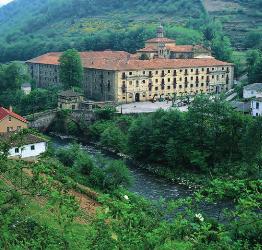
Parador de Corias
(Asturias)
Founded in 1028, the ancient mo-
nastery of San Juan Bautista, lo-
cated on the banks of the Narcea
River and known as ‘El Escorial
de Asturias’, became an impor-
tant spiritual centre whose power
extended over the entire west of
Asturias. In 1593 a new church
was built which, after being sa-
ved from the ferce fre of 1763, is
the most ancient conserved part.
The rest of the building was con-
structed during the 18th century
and forms a large neoclassical
block.
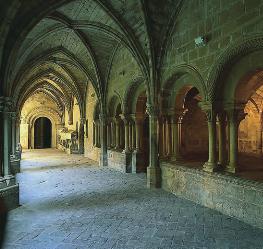
Parador de Veruela
(Zaragoza)
It will be located in the Cistercian
monastery in Aragon which dates
back to the 12th century. The area
is enclosed by a wall (16th centu-
ry) with a one kilometre perime-
ter and has an impressive church
with a Romanesque portal and
three high naves covered with
Gothic cross ribs. The Hotel is lo-
cated in the area known as the
newmonastery (monastery of the
Jesuits) and in other rooms of the
Cistercian monastery.
Parador de Ibiza
(Islas Baleares)
The frst Parador of the network
on the Balearic archipelago will
be located in Almudaina Cast-
le, which dates back to the 18th
century and is found in the histo-
rical centre of the city of Ibiza,
known as Dalt Vila and decla-
red a World Heritage Site by
UNESCO.
XVI siècle, destiné aux af-
faires et aux conventions.
Parador de Lorca
(Murcia)
Ce parador est en cours de cons-
truction aux alentours d’une cas-
bah musulmane, en respectant
méticuleusement chaque reste
archéologique ayant été décou-
vert.
Parador de Corias
(Asturias)
Fondé en 1028, l’ancien mo-
nastère de San Juan Bautista,
situé aux abords du feuve Nar-
cea et connu sous le nom de «
El Escorial de Asturias », devint
un important centre spirituel dont
le pouvoir se répandit sur tout
l’occident asturien. En 1593, une
nouvelle église fut construite la-
quelle, rescapée de l’incendie
vorace de 1763, représente la
partie la plus ancienne conser-
vée. Le reste du bâtiment fut con-
struit durant le XVIIIème siècle et
forme un grand bloc néoclas-
sique.
Parador de Veruela
(Zaragoza)
Il se situera dans le premier mo-
nastère cistercien d’Aragon,
datant du XI Ième siècle.
L’ensemble est entouré par une
muraille (XVIème siècle) ayant
un périmètre d’un kilomètre et
possède une grandiose église
au portail roman et trois hautes
nefs couvertes par des croisées
d’ogives gothiques. L’hôtel se
situera dans la zone connue
en tant que monastère nouveau
(monastère des jésuites) et dans
d’autres pièces du monastère
cistercien.
Parador de Ibiza
(Islas Baleares)
Le premier parador dont
disposera le réseau dans
l’archipel des Baléares se si-
tuera au château de la Almu-
daina, datant du XVIII siècle,
qui se trouve au centre histo-
rique de la ville d’Ibiza, connu
sous le nom de Dalt Vila et clas-
sé Patrimoine de l’humanité par
l’UNESCO.