


Page 60 - Costa Live - Magazine
P. 60
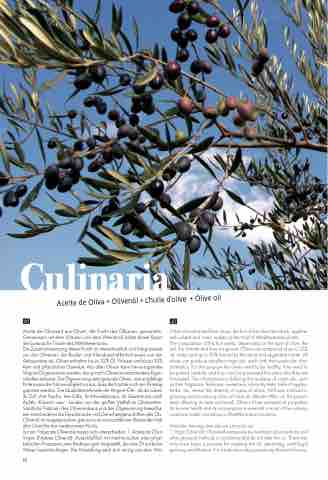
 Culinaria
.de)
Aceite de Olivawird aus Oliven, der Frucht des Ölbaums, gewonnen. Gemeinsam mit dem Weizen und dem Weinstock bildet dieser Baum die botanische Triade des Mittelmeerraums.
Die Zusammensetzung dieser Frucht ist unterschiedlich und hängt jeweils von der Olivenart, der Boden- und Klimabeschaffenheit sowie von der Anbauweise ab. Oliven enthalten bis zu 32% Öl, Wasser und bis zu 35% Kern und pflanzliches Gewebe. Aus allen Oliven kann hervorragendes Vergine-Öl gewonnen werden, das je nach Olivenart verschiedene Eigen- schaften aufweist. Die Ölgewinnung setzt gesunde Oliven, eine sorgfältige Ernte sowie die Notwendigkeit voraus, dass die Früchte noch am Erntetag gepresst werden. Die Qualitätsmerkmale der Vergine-Öle - als da wären ihr Duft, ihre Frische, ihre Süße, ihr Mandelaroma, ihr Geschmack nach Äpfeln, Kräutern usw. - künden von der großen Vielfalt an Olivenarten. Sämtliche Faktoren des Olivenanbaus und der Ölgewinnung beeinflus- sen entscheidend die Geschmacks- und Geruchseigenschaften des Öls. Olivenöl ist ausgesprochen gesund und unverzichtbarer Bestandteil fast aller Gerichte der mediterranen Küche.
Sorten: Folgende Olivenöle lassen sich unterscheiden: 1. Aceite de Oliva Virgen (Natives Olivenöl): Ausschließlich mit mechanischen oder physi- kalischen Prozessen unter Bedingungen hergestellt, die das Öl auf keine Weise beeinträchtigen. Die Herstellung setzt sich einzig aus dem Wa-
60
.uk)
Olive oil is extracted from olives, the fruit of the olive tree which, together with wheat and vines, makes up the triad of Mediterranean plants. The composition of this fruit varies, depending on the type of olive, the soil, the climate and how it is grown. Olives are composed of up to 32% oil, water and up to 35% formed by the stone and vegetable matter. All olives can produce excellent virgin oils, each with their particular char- acteristics. For this purpose the olives need to be healthy, they need to be picked carefully and they must be processed the same day they are harvested. The characteristics defining the qualities of virgin oils, such as their fragrance, freshness, sweetness, almondy taste, taste of apples, herbs, etc. reveal the diversity of types of olives. All those involved in growing and producing olive oil have an ultimate effect on the param- eters affecting its taste and smell. Olive oil has exceptional properties for human health and its consumption is essential in most of the culinary creations made nowadays in Mediterranean countries.
Varieties: Among olive oils we can pick out:
1. Virgin Olive Oil: Obtained exclusively by mechanical procedures and other physical methods in conditions that do not alter the oil. There can only have been a process for washing the oil, decanting, centrifugal spinning and filtration. It is a natural product preserving the fruit‘s flavour,
  Aceite de Oliva + Olivenöl + L’huile d’olive + Olive oil


